
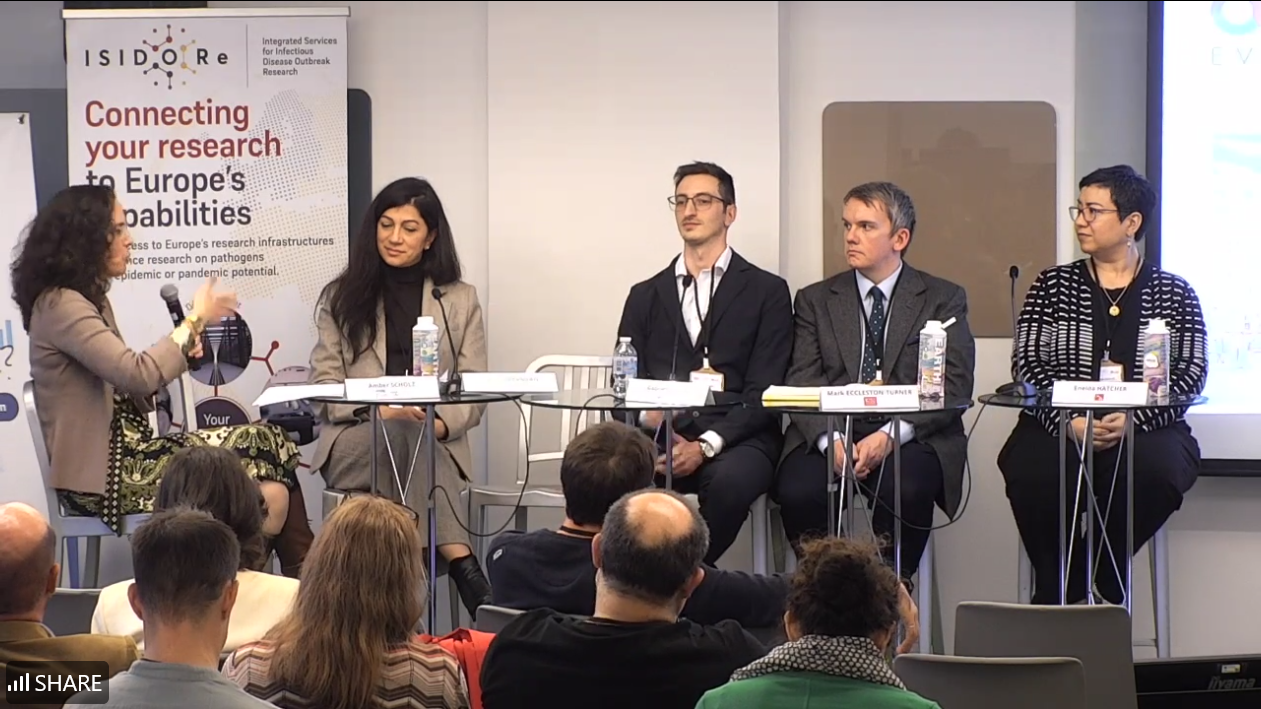
On 5 November in Brussels, INTERCEPTOR joined ISIDORe and EVORA in bringing together more than 120 research infrastructure experts, scientists, policymakers and preparedness stakeholders to discuss how European research infrastructures can contribute to lasting global resilience.
The conference explored the connections between scientific capabilities, international cooperation and public health policy, with a shared focus on ensuring that research infrastructures can support preparedness over the long term.
International cooperation at the heart of preparedness
For INTERCEPTOR, the event provided an opportunity to highlight the importance of connecting research capacities across borders. Alongside EVORA and ISIDORe, the project presented complementary approaches to strengthening collaboration between research infrastructures, improving interoperability and facilitating access to scientific services.
These discussions addressed a central challenge: how to bring expertise, facilities and services together so that researchers can access the support they need to tackle emerging infectious diseases and advance medical countermeasure development.
Linking scientific capabilities and policy
Contributions from EVA, ERINHA and ELIXIR illustrated the breadth of research infrastructures’ support for preparedness, spanning infectious disease research, pathogen surveillance and data services.
The programme also examined how these capabilities connect with international preparedness frameworks, including the WHO Pandemic Agreement and its Pathogen Access and Benefit-Sharing (PABS) system. Participants discussed the role of scientific cooperation in informing evidence-based policies and strengthening links between research and global health priorities.
Sustaining capacities beyond individual projects
Representatives from DG RTD, DG HERA, the BE READY European Partnership for Pandemic Preparedness and CEPI contributed perspectives on future priorities, long-term sustainability and science diplomacy.
For INTERCEPTOR, these exchanges reinforced the value of building durable international partnerships. Sustaining research capabilities and making them accessible between emergencies is essential to supporting a coordinated response when new threats emerge.
INTERCEPTOR thanks its co-organisers, speakers, panellists and participants for their contributions to this dialogue on the future of pandemic preparedness.