
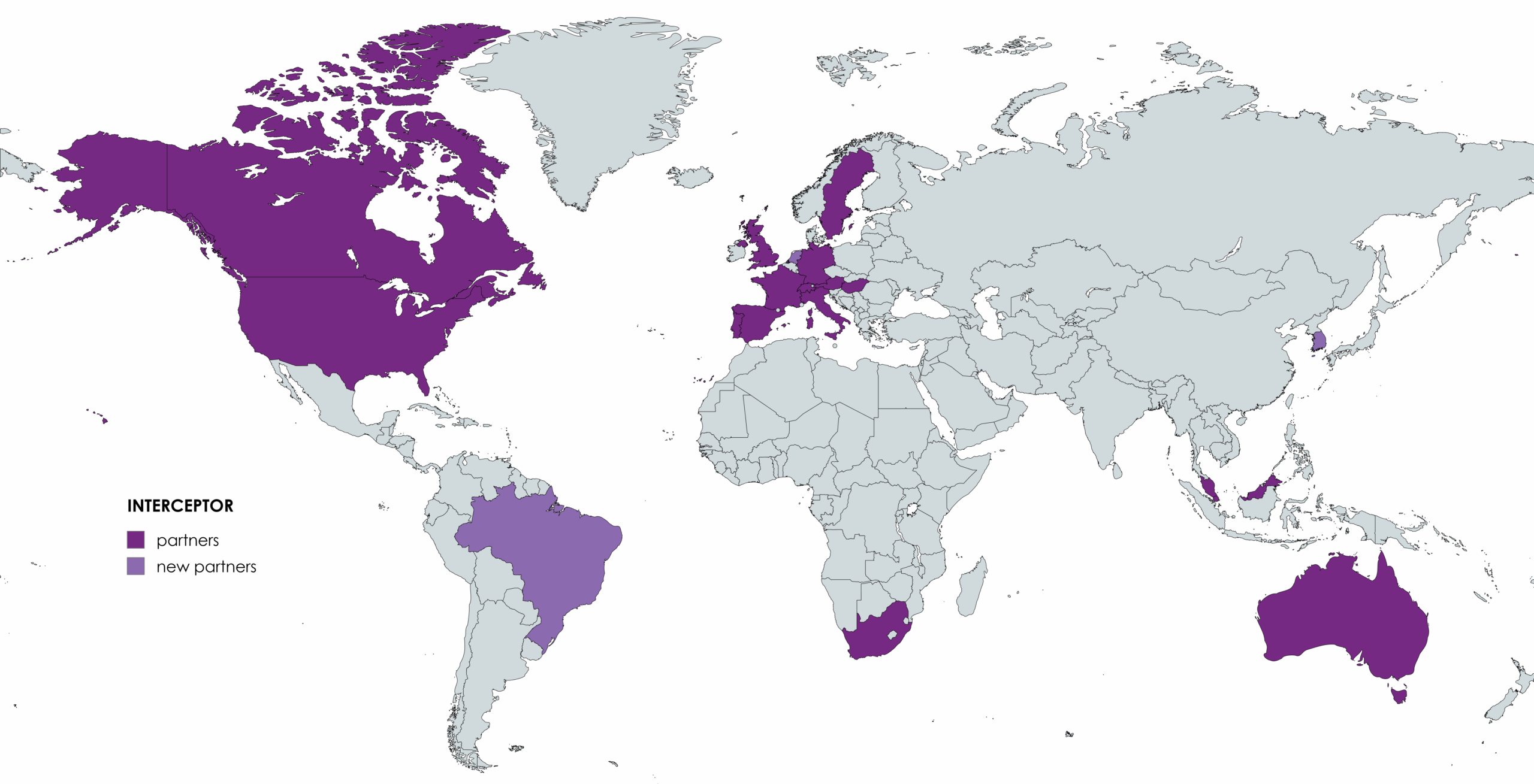
The EU-funded INTERCEPTOR network is expanding its international reach with five new Associated Partners across Asia, Europe and Latin America, strengthening global collaboration in high-containment research and pandemic preparedness.
This expansion reinforces cooperation between leading research infrastructures and enhances the global capacity to respond to emerging and re-emerging infectious diseases.
The new partners bring cutting-edge expertise and advanced facilities, including BSL-3 and BSL-4 laboratories, further strengthening INTERCEPTOR’s ability to address high-risk pathogens through coordinated international action.
New Associated Partners
Robert Koch Institute (RKI), Germany
As Germany’s national public health institute and a WHO Collaborating Centre, RKI plays a key role in disease surveillance and outbreak response. Its BSL-4 facility supports research on highly pathogenic viruses, while its public health expertise helps translate research into policy.
Brazilian Center for Research in Energy and Materials (CNPEM), Brazil
CNPEM operates Sirius, one of the world’s most advanced synchrotron light sources, and is developing Latin America’s first BSL-4 laboratory through its Orion project. This combination will open new avenues for studying high-risk pathogens and accelerating innovation in pandemic preparedness.
Institut Pasteur Korea (IPK), South Korea
A leading institute in the Asia-Pacific region, IPK combines high-containment laboratory capabilities with advanced drug discovery platforms, supporting the rapid translation of research into therapeutic solutions.
Erasmus Medical Center (Erasmus MC), The Netherlands
Erasmus MC hosts a globally recognised viroscience department and advanced BSL-3 facilities. Its work on zoonotic viruses and high-consequence pathogens bridges fundamental research, clinical science and public health.
Fiocruz – Bio-Manguinhos, Brazil
Part of the Oswaldo Cruz Foundation, Bio-Manguinhos specialises in vaccines, diagnostics and biopharmaceutical innovation. Its infrastructure and international partnerships support large-scale responses to infectious disease threats, particularly in low- and middle-income countries.
A stronger global response to high-risk pathogens
By expanding its network, INTERCEPTOR strengthens its capacity to support rapid, coordinated responses to infectious disease threats worldwide. These new partnerships will foster knowledge exchange, improve access to specialised facilities, and support joint research and innovation across continents.
“This expansion marks an important milestone in strengthening global preparedness against high-risk pathogens. By bringing together leading infrastructures worldwide, we are building a more connected and resilient ecosystem,” said Audrey Richard, INTERCEPTOR Project Coordinator.